


Customer Lifetime Value: Metrics + Strategies to Boost Profits
Thinking about the lifetime value of your customer relationships tends to lead back to why you're in business in the first place. It isn't just about closing a deal. Your priorities shift toward keeping customers happy, helping them succeed with your product, and giving them the support they need to get the most out of the relationship. That's good business, both conceptually and financially.
Beyond the ideal of steady relationships, customer lifetime value is a metric that tells you a lot about the health of your business. It's often where the first signs of strain show up, whether in your product, onboarding, collections, or relationships. When those start to falter, CLV points owners toward where to act, and making your existing customers happier usually means you have a stronger product to sell.
In this guide, we break down what customer lifetime value is, how to calculate it from a few key metrics, and how to interpret it to run a stronger business. We'll also cover why it helps to have a financial platform that surfaces insights into your revenue, like Slash, and how that ties into CLV. With Slash, your revenue lands in one place, with real-time metrics on your cash flow, tools to speed up payment collection, and an AI assistant that can calculate the KPIs behind your revenue trends. Keep reading to learn more.
What is Customer Lifetime Value (CLV)?
Customer lifetime value is the total profit a business can expect to earn from a single customer over the entire relationship, after the cost of serving them.
A single sale doesn't say much about how much value a customer will deliver over the course of a year or longer. CLV tells you how much a customer is worth over time, which in turn tells you how much you can afford to spend to acquire and keep them. Companies that track it may invest more deliberately in retention rather than driving raw signups.
CLV is typically paired with customer acquisition cost, or CAC, which is what you spend to win a new customer: ad spend, sales salaries, and onboarding costs divided by the customers those efforts brought in. A low CAC looks great until those customers churn in two months, and a high CLV looks great until you see it cost more to acquire them than they will ever return.
The relationship is usually expressed as a ratio. If a customer is worth $900 over their lifetime and costs $300 to acquire, the CLV-to-CAC ratio is 3:1, the figure often cited as healthy for a sustainable business (though the right number depends on your margins, industry, and stage). A ratio of 1:1 means you are spending nearly everything a customer is worth just to get them, leaving nothing for profit. Conversely, a highly unbalanced ratio such as 7:1 or more may indicate you're underinvesting in growth.
How to calculate customer lifetime value
CLV measures profit, not revenue; a common mistake is using average revenue per purchase as the input, which inflates the number. Three inputs go into the calculation:
- Average profit per purchase: The profit left from a typical order after the cost of delivering it. A $50 order at a 60% gross margin leaves $30.
- Purchase frequency: The number of total purchases divided by unique customers. A thousand orders from 250 customers is 4.
- Customer lifespan: How long the average customer keeps buying, in years. This tracks churn: a 20% annual churn rate implies a lifespan of about five years.
Multiply the three together to get your CLV. In this example, $30 x 4 x 5 gives a CLV of $600.
The Role of Customer Relationship Management (CRM) in CLV
Customer relationship management (CRM) is the practice of managing how a business interacts with customers across the whole relationship, from the first sale through support, renewals, and repeat purchases. Lifetime value is built one interaction at a time, and CRM is how a business shapes those interactions on purpose, which makes it the main lever for raising CLV.
It starts with knowing which customers matter most. For many businesses, a small share of customers drives a large share of profit. High-value customers tend to behave differently: they buy across more categories, refer others, and are less price-sensitive. Tracking the behaviors that feed CLV (frequency, average order size, tenure) helps identify who they are, which changes how you treat them, from prioritizing their support to designing offers around what they purchase.
The practice of targeting these different groups is called customer segmentation. Rather than treating every customer identically, you group them by shared behaviors so you can tailor how you sell and serve. A common framework is recency, frequency, and monetary value (RFM): how recently a customer bought, how often, and how much. Scoring on those axes surfaces the groups worth attention, like recent frequent buyers worth protecting and once-loyal customers who have gone quiet.
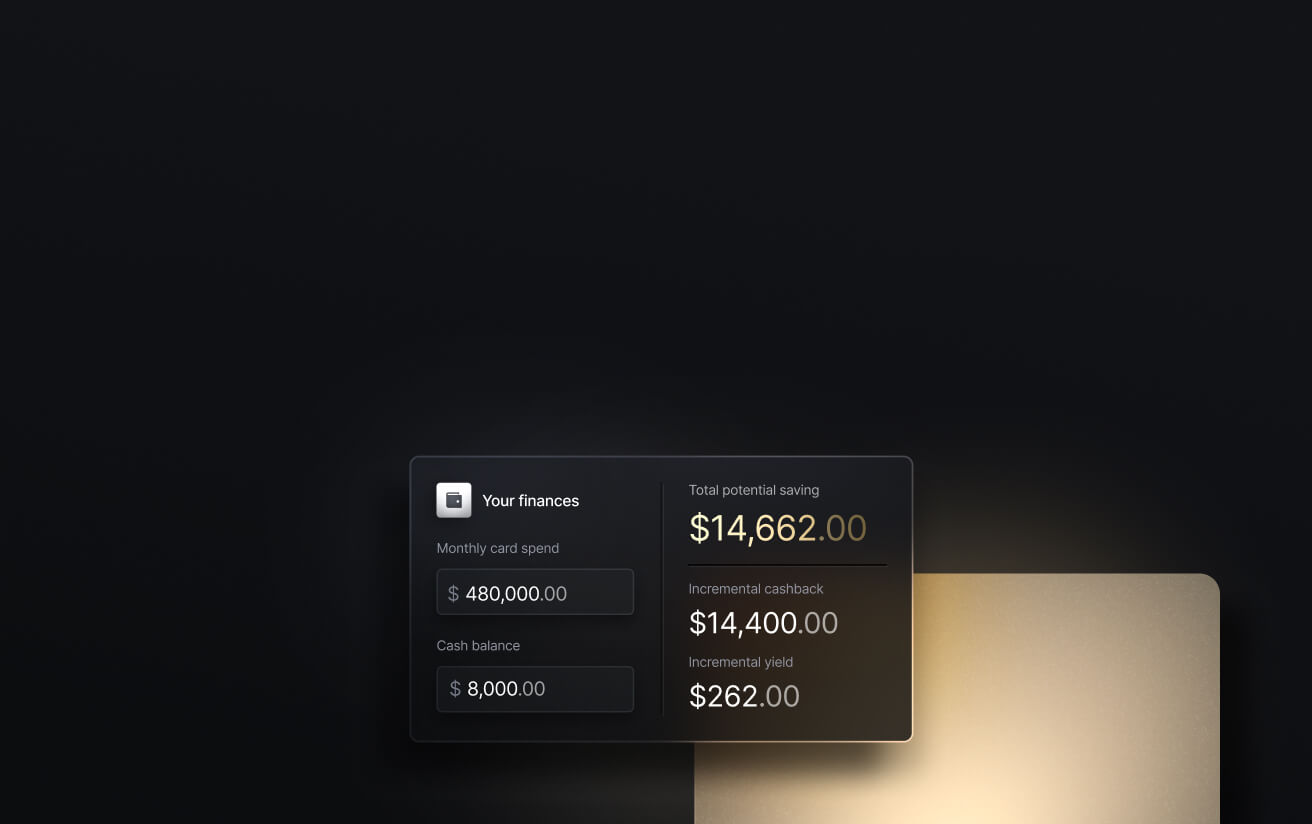
See the ROI behind your spend
Use this calculator to understand impact, then manage and track it all in Slash.

Techniques to Improve Customer Lifetime Value
The value customers generate for your business is not out of your control. Raising CLV usually rests on a few improvements that follow an order: first, determine the metrics that reveal how your customers are behaving; second, use proven strategies to strengthen relationships and reduce churn based on those metrics; and last, make sure your business is equipped with the proper tools to collect revenue efficiently. Here's how each of those plays out:
Measure Customer Satisfaction Scores
You cannot improve what you do not measure, and satisfaction is a leading indicator of retention. There are three main scores to track: net promoter score (NPS) asks how likely a customer is to recommend you; customer satisfaction score (CSAT) captures satisfaction with a specific interaction; customer effort score (CES) measures how hard a customer had to work to get something done. Regularly reading reviews, speaking with customers, and collecting data about how people use your product is the place to start when determining these scores for the first time.
Implement Customer Loyalty Programs
As a retention technique, loyalty programs can make staying with your product more valuable than leaving. Deals that compound with tenure, early access, or member-only pricing all raise the cost of switching. Loyalty programs are only valuable if they achieve their goal, which is reducing churn or downgrades; if a competitor keeps taking your customers, you have a bigger product issue at hand. Measure whether enrolled customers actually buy more often or stay longer than comparable customers who are not enrolled. If they do not, the program is just a discount, not a retention strategy.
Identify Churn Triggers
Managing churn requires a bit of clairvoyance. Rather than fixing things after customers start leaving, it takes foresight into where your product lags competitors, and then closing those gaps. There are some tell-tale signs that churn is approaching: a drop in usage or frequency, a support issue handled poorly, a lapsed payment, or a long gap since the last order. Define what an at-risk customer looks like in your business, such as no purchase in 90 days when the average customer buys monthly, and determine your next steps to address that customer's needs when they hit that threshold.
Identify Upselling Opportunities
Upselling (a higher-value version of what they already use) and cross-selling (complementary products) both raise average purchase value and frequency. They work because selling to an existing customer costs a fraction of acquiring a new one, at higher conversion rates. An upsell that fits demonstrated behavior, like offering more capacity to an account near its limit, can seem helpful; an untargeted upsell out of nowhere can have the opposite effect. This is where segmentation can pay off: the same purchase data that identifies your high-value customers also tells you what they are likely to want next.
Analyze Trends and Patterns
Analyzing trends means moving from snapshots to patterns: which segments are growing in value, where churn is accelerating, and how CLV is shifting quarter over quarter. Cohort analysis, grouping customers by when they first bought and tracking each group over time, shows whether newer customers are more or less valuable than earlier ones. This depends on complete, current data. Consolidated spend and cash flow analytics, like those Slash provides across accounts and cards, make it easier to see the revenue side of these patterns in real time rather than reconstructing them after the fact.¹
Optimize Accounts Receivable
It's hard to raise lifetime value if you aren't good at collecting value. Reviewing your accounts receivable, the tools and processes that handle collections for money owed to your business, can reveal where you're losing revenue to late, missed, or written-off payments. A shoddy AR process doesn't just strain cash flow; it can also drive churn. Confusing invoices, surprise outreach about overdue balances, and aggressive chase-down tactics all make customers uncomfortable, and an uncomfortable customer is easier to lose.
With Slash, you can create professional invoices with embedded payment links to simplify collections. Your customers pay by bank transfer, card, or stablecoin, with recurring billing options for subscriptions, too.⁴ You can track what's outstanding in one place, send reminders, and see how and when customers are paying, so you can spot slow-paying or at-risk accounts before it turns into a lost customer.
Key Metrics to Monitor for CLV Improvement
Improving CLV is an ongoing process, and a handful of metrics can tell you whether the work is paying off. Track them together and watch for trends, since these metrics usually feed into one another; recognizing how a change in one shows up in the others is what makes them useful.
- Customer acquisition cost (CAC): The total sales and marketing spend to win a customer, divided by the number of customers acquired. Watch it alongside CLV as the CLV-to-CAC ratio, the clearest read on whether growth is sustainable.
- Churn rate: The percentage of customers who stop buying in a given period. Because churn sets customer lifespan, small improvements here move CLV more than almost anything else.
- Retention rate: The percentage of customers you keep over a period, the flip side of churn. Repeat-purchase rate is a close cousin for transactional businesses without subscriptions.
- Average order value (AOV): The average amount a customer spends per purchase, found by dividing revenue by number of orders. It's a direct target for upselling and cross-selling.
- Purchase frequency: How often the average customer buys in a period, calculated as total purchases divided by unique customers. It's the input that loyalty and re-engagement campaigns aim to raise.
- NPS or CSAT: Survey-based satisfaction scores. Net promoter score (NPS) measures how likely customers are to recommend you; customer satisfaction score (CSAT) captures satisfaction with a specific interaction. Both are leading indicators of retention problems before they show up in churn.
- Payback period: The time it takes to earn back what you spent acquiring a customer. It's a check on cash flow even when the CLV-to-CAC ratio looks healthy.
Make the Right Financial Move with Slash
Improving customer lifetime value starts with seeing your revenue clearly. With Slash, your revenue lands in one place with real-time analytics on cash flow and incoming payments, so you can easily see what customers pay, how often, and how that's trending by cohort. Twin, Slash's AI financial assistant, can calculate the KPIs behind those trends on demand, from revenue by segment to how purchase frequency is shifting quarter over quarter, so you spend less time building reports and more time acting on them.
The other half of CLV is collecting the revenue you've already earned, and doing it in a way that keeps customers around. With Slash, you can send professional invoices with embedded payment links, set up recurring billing for subscriptions, and let customers pay by bank transfer, card, or stablecoin, so payments come in faster and collections stay steady without the awkward chase-downs. Once revenue lands in Slash, you can put it to work, too: idle cash in Slash Treasury can earn up to 3.83% annualized yield through institutional money market funds from BlackRock and Morgan Stanley, so the money you collect keeps earning instead of sitting stagnant.⁶
Here's what else you get with Slash:
- Slash Visa Platinum Card: A corporate charge card that earns up to 2% cash back on eligible business spending. Set granular card controls, custom limits, and team-specific groupings to keep employee spending in line.
- Diverse payment methods: Move money across multiple rails, including same-day ACH, international wire transfers to over 180 countries via SWIFT, and real-time domestic payments through RTP and FedNow.
- Accounting integrations: Connect Slash with QuickBooks, Xero, NetSuite, or Sage Intacct for two-way syncing, so transactions flow into your books automatically and month-end reconciliation stays clean.
- Native cryptocurrency support: Send and receive USD-pegged stablecoins USDC and USDT across eight supported blockchains for faster, lower-cost global payments.
- Working capital financing: Access short-term financing with flexible 30-, 60-, or 90-day repayment terms to bridge cash flow gaps and fund growth.⁵
Apply in less than 10 minutes today
Join the 10,000+ businesses already using Slash.
Frequently Asked Questions
What is a good customer lifetime value?
There is no universal benchmark, because a good CLV is relative to what it costs to acquire and serve a customer. The more useful measure is the CLV-to-CAC ratio, where roughly 3 to 1 is often cited as healthy. Track your own CLV over time and by segment; a number that is rising and comfortably above your acquisition cost matters more than any absolute figure.
How is customer lifetime value different from customer lifetime revenue?
Lifetime revenue is the total a customer pays you; lifetime value, done properly, subtracts the cost of goods and of serving that customer, so it reflects profit. A customer can generate high revenue and still be barely profitable if margins are thin. For decisions about acquisition and retention spend, use the profit-based version.
How to Calculate Monthly Recurring Revenue (MRR): A Guide

How often should a business recalculate CLV?
For most businesses, quarterly is a reasonable cadence, often enough to catch shifts in churn or spending without overreacting to noise. Recalculate sooner after a significant change, such as a pricing update or new loyalty program, so you can see its effect. The goal is a trend line you can act on.
Can improving retention really increase CLV that much?
Yes, because retention drives lifespan, and lifespan multiplies every other input in the calculation. A modest reduction in churn extends how long customers keep buying, compounding their frequency and order value over more periods. It is usually cheaper to move CLV by keeping existing customers than by acquiring new ones, which is why retention is often the most cost-effective place to start.
Net Revenue Retention: What It Is and How to Calculate It


